Shaping structure, standards, and strategy for a national design system
Overview
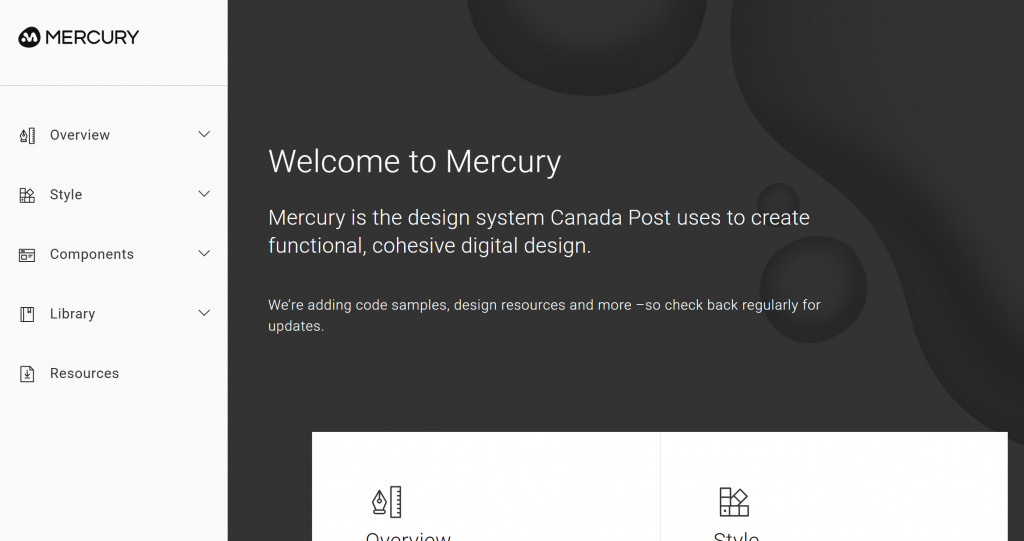
I joined Project Mercury—the team responsible for building Canada Post’s design system—as a UX Content Writer. Very quickly, it became clear that my skillset offered more value than writing alone. My early participation in design sessions revealed gaps in structure, documentation, and operational clarity. The Director of Design placed me in a de facto Product Owner role, responsible for shaping the backlog while also writing and governing design system content.
This hybrid role allowed me to influence not just what we documented, but how the entire system functioned.
The Challenge
Canada Post needed a design system that could support dozens of teams, hundreds of contributors, and a vast digital ecosystem. The work required:
- Clear, consistent documentation
- Cross‑functional alignment
- Accessible, scalable patterns
- A navigable information architecture
- A backlog that reflected real product needs
The team needed someone who could bridge design, content, development, and operations. That became my role.
My Role
I operated as both Product Owner and Content Designer, responsible for:
- Writing and maintaining all Jira tickets for components, patterns, and guidelines
- Collaborating with designers, developers, content experts, and product teams
- Ensuring accessibility best practices were embedded in every component
- Designing and evolving the information architecture, navigation, and taxonomy
- Establishing content standards and templates across the design system
- Championing those standards within Canada Post’s content Community of Practice
This work shaped the foundation of how the design system was built, understood, and used.
What I Did
1. Owned and Managed the Backlog
I wrote and maintained every Jira ticket related to:
- Components
- Patterns
- Usage guidelines
- Accessibility requirements
- Content standards
This ensured the backlog was clear, actionable, and aligned with product priorities.
2. Documented Components and Patterns Across Disciplines
I partnered with:
- Designers to capture tokens, states, and interaction rules
- Developers to document code snippets and implementation details
- Content experts to define character limits, alt‑text requirements, and truncation behavior
- Product teams to ensure patterns reflected real user needs
This cross‑functional collaboration ensured documentation was accurate, complete, and usable.
3. Championed Accessibility
Accessibility was not an afterthought at Canada Post. I wrote an Accessibility tab for every component.
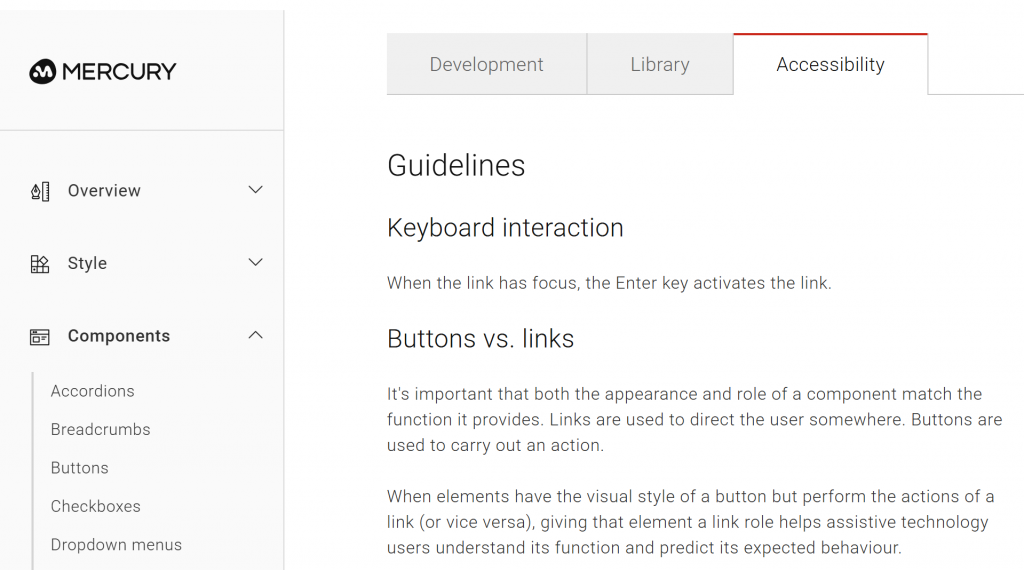
I ensured every component and pattern included:
- WCAG‑aligned guidance
- Clear descriptions of expected behavior
- Requirements for alt‑text, labels, focus states, and error handling
This helped teams build accessible experiences consistently and confidently.
4. Designed the Information Architecture
One of my most impactful contributions was shaping the design system’s IA.
A key example: Component pages used role‑based tabs, allowing users to select the content relevant to their discipline.
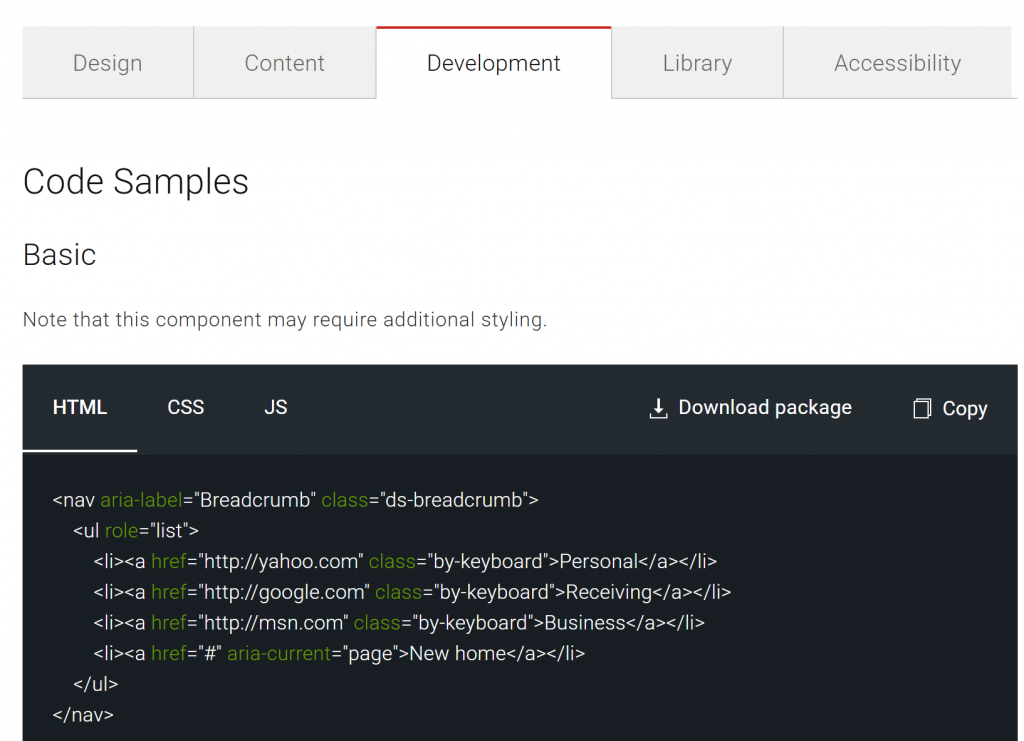
- Designers saw tokens, states, spacing rules, and interaction guidance
- Content designers saw character limits, alt‑text rules, truncation behavior, and naming conventions
- Developers saw information like code snippets and implementation details
This structure reduced cognitive load and made the system dramatically easier to navigate.
5. Established Content Standards
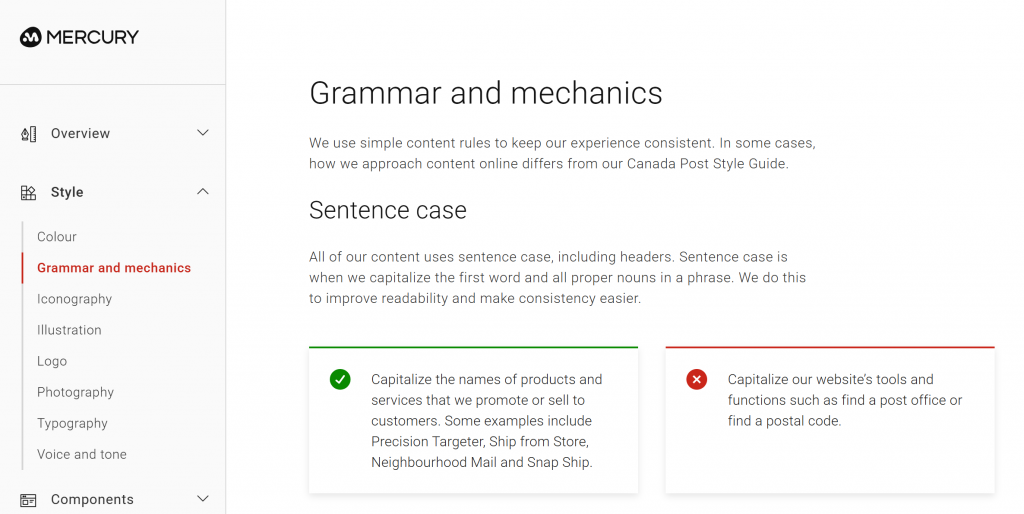
Canada Post had many different documents throughout the organization governing content. I worked to consolidate them in Mercury, working with writing teams to consolidate and author:
- Templates
- Style guidelines
- Documentation standards
I then championed these standards across Canada Post’s content Community of Practice, giving writers the tools and language they needed to defend best practices with stakeholders.
What This Work Developed
Content hierarchy and information design
This role is where I learned the true difference between writing and Content Design—how structure, hierarchy, and clarity shape the usability of a system.
Facilitation and cross‑functional collaboration
I integrated the work of multiple teams, facilitated design discussions, and synthesized feedback into documentation that influenced delivery roadmaps across the organization.
Accessibility expertise
I gained deep familiarity with WCAG and how accessibility requirements apply to UI components and patterns.
Design tooling fluency
I worked extensively with Figma, tokens, responsive design principles, and component‑based thinking.
Operational and agile experience
I managed multiple documentation streams in a fast‑paced agile environment and developed a genuine love for Jira as a strategic tool.
Reflection
This project taught me how to operate at the intersection of design, content, and product. It showed me how much value content design brings when it shapes systems—not just words. And it reinforced that the best design systems aren’t just collections of components—they’re living, navigable, accessible sources of truth that empower teams across an entire organization.